Posts Tagged ‘Johan Thom’
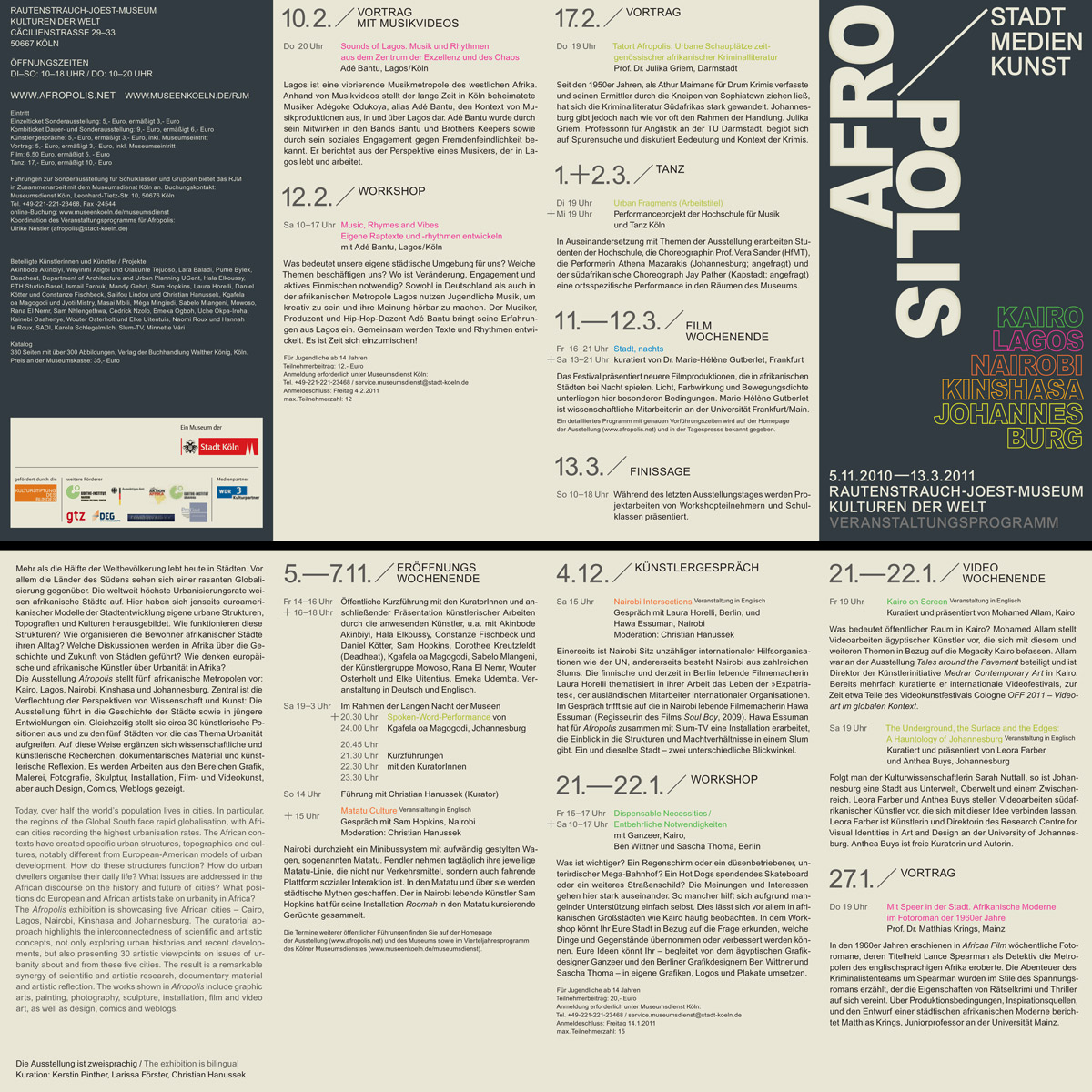
Afropolis- Rautenstrauch-Joest-Museum – Kulturen der Welt
Posted in News, tagged African cities, Afropolis, contemporary African art, Johan Thom on October 14, 2010|
Talk as part of the Slade School of Fine Art’s PhD Forum
Posted in News, tagged Johan Thom, Laura Malacart, Slade School of Fine Art on September 29, 2010|

Artist statement: Real presence 2010
Posted in News, tagged artists and materials, artists statement, gold, Johan Thom, politics, Real Presence 2010, visas on August 31, 2010|
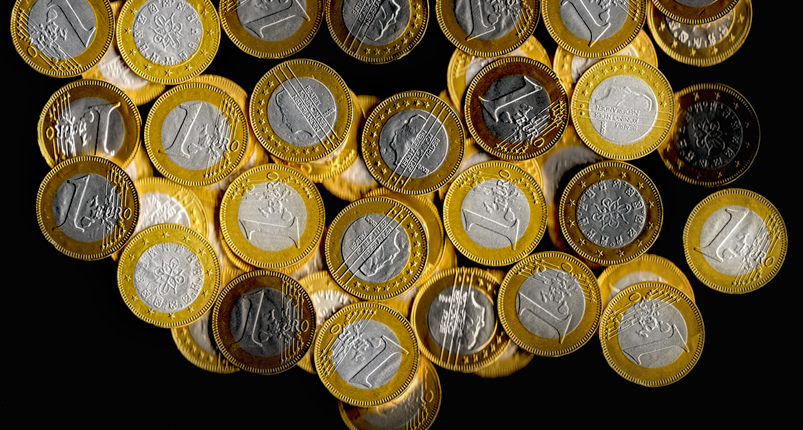
Gold Euro chocolate coins distributed to audience as part of statement read at ‘Real Presence 2010: Expanded concept of art practice and art education’, held in Belgrade and organised by Biljana Tomic and Dobrila Denegri, nKA-Ica,
Belgrade, Serbia
ARTIST STATEMENT Statement prepared for ‘Real Presence 2010: Expanded concept of art practice and art education’, held in Belgrade and organised by Biljana Tomic and Dobrila Denegri (nKA-Ica, Belgrade).
I am truly disappointed and saddened to not to be there with you all. This is due to circumstances
beyond my control. In this regard I have sent along a small component of the talk and the performance that I was due to give as part of the program.
The artist Gary Stevens has kindly agreed to distribute some gold Euro chocolate coins amongst the audience and to read this statement. Whilst you listen I ask that each of you take one and pass them along. You may do with these coins whatever you desire but with the exception of any diabetics in the audience, it is my sincere hope that you will eat them at some point.
Given the turn of events, the gold euro chocolate
coin now seems an apt – if somewhat obvious – reference inasmuch as it brings together a number of ‘threads’. These threads are as much conceptual, as material, artistic, practical and political in nature: I am not with you for I have had problems obtaining a visa. This due to the fact that Belgrade is not part of the EU – for which as luck would have it I currently do have a temporary Schengen visa. Moreover, I am currently living in London on a temporary student visa. It’s all somewhat Kafkaesque and my situation is far from unique or extraordinary.
Moreover, I am a South African and gold does have a particular history there, in the messy politics and history of the ‘new world’ too. The promise and subsequent discovery of gold at the Rand in 1852 in no small way contributed to my being what and
who I am today – a white African with the eponymous first name of ’Johannes’. (Statistically speaking it is estimated that more than 40% of all the gold mined in the world thus far came from the main gold reef in Johannesburg – ergo the nickname ‘the city of Gold’).
It may be said that the gold coin implies some dominant form of ‘currency’ – one that shapes who we are, how we move around in the world (or not) and most specifically how this ‘frames’ the role of the artist therein.
In order to keep it short, I am just going to say one more thing: I have sent along these gold chocolate Euros because I think there is an important way in which artists communicate through materials – transforming ourselves and the world around us in the process. This way of communicating cannot simply be framed by discourse and language – a statement by which I mean to imply that such material exchanges will always modify, exceed and question the representational structures that we have so carefully cultivated in order to make sense of the world and our place in it.
In short, apart from what this gold chocolate coin looks like, it has a number of material properties that somehow resonate with the core of our very being as humans: its smell, taste, texture and so on all contribute to some kind of mutual affinity between us and it. This simple material affirmation of the world draws our attention not only to what we are, but rather, to what we could become.
And unlike the visa that participates in the more one-sided process of ‘writing us’, this story always has more than two sides or possible outcomes – a simple fact borne out by the sheer diversity and vastness of the natural world that surrounds us.
Johan Thom, London 2010
Real Presence 2010: EXPANDED CONCEPT OF ART PRACTICE AND ART EDUCATION
Posted in News, tagged Adrian Notz, Angela Vettese, Catterina Seia, Chiara Parisi, Gabriëlle Schleijpen, Helke Bayrle, Joa Ljungberg, Johan Thom, Mans Wrange, Milenko Prvacki, Natasa Teofilovic, Peter Pakesh, Rainer Fuchs, Seppo Salminen, Sibylle Omlin, Simon Thorogood, Stephan Schmidt-Wulffen, Thomas Bayrle, Tobias Rehberger, Victoria Vesna on July 24, 2010|
TALKS & LECTURES: “EXPANDED CONCEPT OF ART PRACTICE AND ART EDUCATION”
26.08 – 7.09. 2010 / 15.30 – 19.30
Venue: Belgrade City Library / Knez Mihailova street, 56 / http://www.bgb.rs
Calendar of lectures, talks and presentations (power point, video) – daily program 15.30 till 19.30
| 15.30 | 17.00 | 18.15 | 19.00 | |
| Thursday 26.08 | Dobrila Denegri
Real Presence 2001-10 Academy of Fine Arts, Vienna – students presentation |
Academy of Fine Arts, Vienna – students presentation | The Icelandic Art Academy
Mans Wrange (Rektor, KKH – Royal Institute of Art, Stockholm) |
Gabriëlle Schleijpen (Director, ArtEZ Institute of the Arts, Enschede |
| Friday 27.08 | KHIO – Royal Academy for Arts, Oslo | Finnish Academy of Fine Arts
University of Applied Arts Vienna |
Thomas Bayrle (Frankfurt) | Helke Bayrle (Frankfurt) film screening / Porticus |
| Saturday 28.08 | UCLA, Media & Design Dep. Los Angeles
ArtEZ Institute of the Arts, Enschede Hansung University, Seul |
Royal Institute of Art, Stockholm
Ecole Municipale des Beaux-Arts de Bordeaux ERBA Ecole Régionale des Beaux Arts de Rennes |
Marta Smolinska (Phd. Chair of the History of Art and Culture, Nicolaus Copernicus University, Torun, Roland) | Sibylle Omlin
Director, ECAV – Ecole cantonale d’Art du Valais |
| Sunday 29.08 | FREE / | FREE / | FREE / | FREE / |
| Monday 30.08 | Bezalel Academy of Arts and Design – MFA | ECAV – Ecole cantonale d’Art du Valais
National University of Arts – Bucharest |
Simon Thorogood, Artist, London Fashion College | Johan Thom
Artist, Johannesburg / London |
| Tuesday 31.08 | Hungarian University of Fine Arts, Budapest | Accademia di Belle Arti di Palermo | Stephan Schmidt-Wulffen (Dean, Akademie der Bildenden Künste, Wien) | Opening of the exhibition – Belgrade City Museum |
| Wednesday 1.09 | Ecole Supérieure des Beaux-arts de Nantes Métropole | individual presentations of students from Germany, Greece, | Faculty for Fine Arts, Belgrade
Adrian Notz (Curator, Cabaret Voltaire, Zurich |
Opening of the exhibition – Palazzo Italia |
| Thursday 2.09 | Facultad de Bellas Artes, Universidad Complutense de Madrid
Facultad de Bellas Artes Alonso Cano, Granata Middelsex University of Art London Laban, London |
Central Saint Martins College
Accademia di Belle Arti di Brera individual presentations Italy |
IUAV – Venice
Accademia di Belle Arti, Carrara Malin Stahl, Stockholm |
Joa Ljungberg (Curator, Moderna Museet, Malmo)
Ósk Vilhjálmsdóttir Artist, (Professor, Academy of the Arts, Reykjavík |
| Friday 3.09 | UCSB – University of California, Santa Barbara /
individual presentations Singapore, Johannesburg, Ucraina |
Sharon Yaari, Artist, (Professors, Bazulel Academy for Art & Design, Tel Aviv), | Seppo Salminen Artist, (Professor, Kuvataideakatemia, Helsinki)
Janos Sugar Artist, (Professor, Intermedia Faculty of the Hungarian University of Fine Arts, Budapest) |
Richard Ross Artist, (Professor, UCSB, Santa Barbara |
| Saturday 4.09 | Staedelschule, Frankfurt | Tobias Rehberger Artist, (Vice-dean, Staatliche Hochschule für Bildende Kunste, Frankfurt | Erik Krikortz, Artist, Stockholm | Opening of the exhibition – HAOS GALLERY / HOUSE OF LEGACY |
| Sunday 5.09 | FREE / | FREE / | FREE / | Opening of the exhibition – KAZAMATI / REMONT |
| Monday 6.09 | Rainer Fuchs (Curator, MUMOK, Vienna | Chiara Parisi (Director, Centre international d’art et du paysage de l’île de Vassivière | Giulio Alessandri (Vice-director CLASAV, IUAV – FDA, Venezia | Opening of the exhibition – MKM – MAGACIN |
| Tuesday 7.09 | Patricia Solini (Professor, Ecole Supérieure des Beaux-Arts de Nantes Métropole), Jean-Sylvain Bieth (Professor, Ecole Supérieure des Beaux-Arts de Nantes Métropole) | Medine Altiok (MOCA, Zurich);
Natasa Teofilovic (Lecturer, Faculty of Architecture, Belgrade) |
||
| Wednesday 8.09 | DISINSTALLING | CLENAING | DEPARTURES |
Participants:
Stephan Schmidt-Wulffen (Dean, Akademie der Bildenden Künste, Wien), Mans Wrange (Rektor/Vice-Chancellor, KKH – Royal Institute of Art, Stockholm), Milenko Prvacki (Dean, Lasalle-Sia College of The Arts Singapore), Tobias Rehberger (Vice-dean, Staatliche Hochschule für Bildende Kunste, Frankfurt), Victoria Vesna (Director, Arts&Science Centre, UCLA, Los Angeles / Parsons The New School for Design, NY), Peter Pakesh (Director, Landesmuseum – Joanneum, Kunsthaus Graz), Chiara Parisi (Director, Centre international d’art et du paysage de l’île de Vassivière), Angela Vettese (Director CLASAV, IUAV – FDA, Venezia), Giulio Alessandri (Vice-director CLASAV, IUAV – FDA, Venezia), Catterina Seia (Cultural manager, Art for Business), Gabriëlle Schleijpen (Director, DAI – ArtEZ Institute of the Arts, Enschede), Sibylle Omlin (Director, ECAV – Ecole cantonale d’Art du Valais), Rainer Fuchs (Curator, MUMOK, Vienna), Joa Ljungberg (Curator, Moderna Museet, Malmo), Adrian Notz (Curator, Cabaret Voltaire, Zurich); Seppo Salminen (Professor, Kuvataideakatemia, Helsinki), Patricia Solini (Professor, Ecole Supérieure des Beaux-Arts de Nantes Métropole), Jean-Sylvain Bieth (Professor, Ecole Supérieure des Beaux-Arts de Nantes Métropole), Ósk Vilhjálmsdóttir (Professor, Academy of the Arts, Reykjavík), Sharon Yaari, Gil Shani (Professors, Bazulel Academy for Art & Design, Tel Aviv), Janos Sugar (Professor, Intermedia Faculty of the Hungarian University of Fine Arts, Budapest), Richard Ross (Professor, UCSB, Santa Barbara), Simon Thorogood, (Professor, London Fashion College), Mrdjan Bajic (Professor, Faculty of Visual Arts, Belgrade), Marta Smolinska (Phd. Chair of the History of Art and Culture, Nicolaus Copernicus University, Torun, Poland), Thomas and Helke Bayrle (Frankfurt), Erik Krikortz (Stockholm), Johan Thom (London / Johannesburg), Medine Altiok (MOCA, Zurich); Natasa Teofilovic (Lecturer, Faculty of Architecture, Belgrade) and many more.
Other venues:
EXHIBITION: “PRESENCES” / 31.08 – 7.09. 2010
Openings: 31.08 – Konak Kneginje Ljubice at 19.00
01.09 – Italian cultural institute at 19.00
Venues of exhibitions and special interventions:
- Belgrade City Museum – Konak Kneginje Ljubice / Kneza Sime Markovica street, 8 / http://www.mgb.org.rs
- Palazzo Italia – Italijanski institut za kulturu / Kneza Miloša street, 56 / www.iicbelgrado.esteri.it
- Cervantes Institute / Institut Servantes / Čika Ljubina street, 19 / http://belgrado.cervantes.es
- Austria Cultural Forum – Austrijski kulturni forum / Kneza Mihaila street, 22 http://www.kulturforumbelgrad.org/
- Gallery of Student’s Cultural Centre – Galerija SKC – Studentski kulturni centar / Kralja Milana street, 48 / http://www.skc.org.rs
- Galerija Haos / Dositejeva street, 3 / http://www.gallerychaos.com
- Independent artistic association – REMONT – nezavisna umetnička asocijacija / Makedonska street, 5/II / www.remont.net
- French Cultural Centre – Francuski kulturni centar / Zmaj Jovina 11 / Knez Mihailova street, 31 / http://www.ccf.org.rs
- Goethe-Institut / Knez Mihailova street, 50 / http://www.goethe.de/ins/cs/bel
WORKSHOP: “REAL PRESENCE 10” / 25.08 – 8.09. 2010
Openings: 4.09 / 5.09 / 6.09 from 19.00
Venues:
- MKM – Magacin u Kraljevića Marka, Kraljevića Marka street, 4 – 8
- Belgrade Heritage House / Kuca Legata / Kneza Mihaila street, 46 / http://www.kucalegata.org/
- Military museum – Vojni Muzej – Kazamati / Kalemegdan fortress BB / www.muzej.mod.gov.rs
‘Spillage’ An exhibition of works by PhD students from the Slade School of Fine Art (UCL)
Posted in News, tagged Deborah Padfield, Eleanor Morgan, Elly Thomas, Errol Francis, Johan Thom, Kai Syng Tan, Laura Kuch, Laura Malacart, Tim Long, Veronica Vossen on June 23, 2010|

The Slade School of Fine Art (UCL) invites you to
‘Spillage’
An exhibition of works produced by current PhD students
Venue: The Slade Research Centre, Woburn Square, London, WC1H OAB
Private View: Friday 25 June from 6pm
Dates: 25 – 30 June
web: http://www.ucl.ac.uk/slade/index.php
Fried Art presents: Games People Play (a group exhibition of South African Artists)
Posted in News, tagged Angus Taylor, Art, Diane Victor, Fried Art, Johan Thom, South African art on June 14, 2010|

Fried Art presents: Games People Play (a group exhibition of South African Artists)
Preview on Thursday 17 June at 18h30 by Dr Franco Colin
Music by Bongi Nthombeni
June 2010, the ears are numbed by the cacophony of vuvuzelas in the crowded South African soccer stadiums. What’s happening on the field is what does justice to the idea of GAME. Yet, such formalised games are often only a mild version of the kind of games that are played out in the human arena of political, social, personal and business games, agendas and encounters. These games are ongoing; there’s plenty at stake and much tug of war.
During the 1960s, game theory became a popular study of the way in which human beings operate and compete especially in the fields of computer science, politics, agriculture and economics. Game theory has proven instrumental in understanding how and why decisions are made. Games People Play (1964), a groundbreaking pop psychology book by Eric Berne, introduced the notion of such human gaming based on Freud’s psychodynamic model, particularly the ego states, as a psychology of human interactions called “transactional analysis”. According to Berne, games are ritualistic transactions or behaviour patterns between individuals that can indicate hidden feelings or emotions. In a general sense it can be argued that human encounters involve mind games in which people interact through a patterned and predictable series of “transactions” that are superficially conceivable, but sometimes could mask hidden agendas. Berne (Butler-Bowden 2007) came to the view that within each person were three selves or “ego states” which often contradicted each other. They were characterized by the attitudes and thinking of a parental figure (Parent); the adult-like rationality, objectivity and acceptance of the truth (Adult); and the stances and fixations of a child (Child). The three selves correspond loosely to Freud’s superego (Parent), ego (Adult) and id (Child). Berne (Butler-Bowden 2007) further argued that we teach our children all the pastimes, rituals and procedures they need to adapt to the culture and get by in life, and spend a lot of time choosing their schools and activities, yet we don’t teach them about games, an unfortunate but realistic feature of the dynamics of every family and institution. The book spawned a well-known song by the same title written, composed and performed in 1968 by singer/song-writer Joe South.
During the eighteenth century, a game called “stag hunt “was developed by philosopher Jean-Jacques Rousseau. This game, also known as the assurance game, involves making a choice between individual safety and risky cooperation and involves the idea that two hunters who must decide whether to hunt a hare alone or a stag together. ‘Arguably, the stag hunt describes the ethical dilemma of the scientists who built the atomic bomb. Roughly: The world would be better off without the bomb, but we have to try to build it because our enemy will. Better we have the bomb than our enemy; better both sides have the bomb than just our enemy’ (Poundstone [s.a.]).
In an interview with Arthur Holmberg, Milan Kundera (1985) stated: ‘ … playing games is an important source of pleasure. Real life is linked to a series of deceptions. It disappoints us with its futility. But when we consciously play games, as on stage, we already know that the game is not serious. Thus, the tragic futility of life becomes the joyous futility of play. In totalitarian regimes one quickly learns the importance of humor. You learn to trust or mistrust people because of the way they laugh. The modern world frightens me because it’s rapidly losing its sense of the playfulness of play.’ The playing of games can provide various satisfactions: aggressive and masochistic; expectant readiness with contempt of danger and consequent mastering of situations; repeated endurance of symbolic castration with resurrection of potency when one wins (Stokes 1956).
Accordingly, the “games” people play form the core of the subject matter in the works on display in Games people play. The artworks on exhibition comment on the playing of games through a patterned and often predictable series of “transactions” that might not be superficially conceivable, but mask secret motives, feelings or emotions. Similarly, there are many word games, echoed in the game of the “language” of the artwork that is open-ended and often cloaked in metonymy. The philosopher Wittgenstein maintained that words have a “family” of usages and resemblances: the word “game”, for example, could indicate board games, card games, virtual gaming or soccer games. Such games do not hold a single critical mutual attribute, but rather possess common characteristics and similarities.
Fried Art
http://www.friedcontemporary.com/
430 Charles St Brooklyn, Pretoria, South Africa 0181
TEL/FAX: +27 12 3460158
General information and art courses: info@friedcontemporary.com
Exhibitions and artists: art@friedcontemporary.com
Sources quoted
Butler-Bowden, T. 2007. 50 Psychology Classics: Who We Are, How We Think, What We Do: Insight and inspiration from 50 key books. Nicholas Brealey Publishing, 2007 . [O] Available: http://knol.google.com/k/games-people-play#. Accessed 14 June 2010.
Poundstone, W [s.a.]. Excerpts from Prisoner’s Dilemma. [O] Available: http://www.heretical.com/pound/staghunt.html. Accessed 14 June 2010.
Stokes, A. 1956. Psychoanalytic Reflections on the Development of Ball Games, Particularly Cricket. International Journal of Psychoanalysis. XXXVII:185-192.
Kundera, M. 1985. Interview with Arthur Holmberg. Performing arts journal, Volume 9, 1:25-27.
South African Video Art @ D21 Kunstraum Leipzig
Posted in News, tagged Aryan Kaganov & Nicola Dean, Bridget Baker, Claudia Shneider etc, D21 Kunstraum Leipzig, Joburg Fringe, Johan Thom, Peter Jones on June 8, 2010|
PRIVATE VIEWING – SOUTH AFRICAN VIDEO ART |
|
| Bridget Baker Peter Jones Aryan Kaganof & Nicola Deane Kemang Wa Lehulere Steve Kwena Mokwena George Mahashe Kyle Southgate Johan Thom Robert Weinek + Claudia Shneider |
|
| Steve Kwena Mokwena, THE MEMORY OF THE BRIDGE, (Still) 2010 | |
| Exhibition in Cooperation with JOBURG FRINGE, ZA.
June 12 – 25, 2010 |
|
| D21 art space | Demmeringstr. 21 | D-04177 Leipzig | Germany | www.d21-leipzig.de |
|
Johan Thom and Hans Wilschut at De Swarte Ruiter, Rotterdam 2010
Posted in News, tagged De Zwarte Ruyter, Hans Wilschut, Johan Thom on May 31, 2010|
–––––––––––––––––––––––––––––––––––––––––––––––––––––
––––––––––––––––––––––––––––––
–––––––––––––––––––––––

invites you to
–––––––––––––––––––––––––––––––––––––––––––––––––––––
–––––––––––––––––––––––––––––––––––––––––––––––––––––
invites you to
–––––––––––––––––––––––––––––––––––––––––––––––––––––
–––––––––––––––––––––––––––––––––––––––––––––––––––––
JOHAN THOM
HANS WILSCHUT
–––––––––––––––––––––––––––––––––––––––––––––––––––––
–––––––––––––––––––––––––––––––––––––––––––––––––––––
Exhibition runs 4-18 June 2010
Opening Friday June 4 2010, 8pm
Accompanied with a performance by Johan Thom
–––––––––––––––––––––––––––––––––––––––––––––––––––––
–––––––––––––––––––––––––––––––––––––––––––––––––––––
De Zwarte Ruyter is pleasured to announce a exhibition by
Hans Wilschut and Johan Thom.
In 2008 Johan Thom (1976 Johannesburg) and Hans Wilschut (1966
Ridderkerk) collaborated on various projects. Now their ongoing
friendship and professional dialogue brings them together in
Rotterdam in an exhibition influenced by each other’s work and
interests. Wilschut’s video work ‘Lemniscate’ will be exhibited in one
area of De Zwarte Ruyter. In another area Thom will create a
performance in part as a response thereto and in part as an extension
of their ongoing dialogue.
Wilschut’s newest book publication “Still Motion” will be also be
available for signing by the artist.
–––––––––––––––––––––––––––––––––––––––––––––––––––––
–––––––––––––––––––––––––––––––––––––––––––––––––––––
De Zwarte Ruyter is a new research and presentation space for
contemporary art and visual culture which wants to take a precise
role within the Rotterdam art world and far beyond. De Zwarte Ruyter
operates from the belief that new expressions of art, the development
of new or alternative ideas can best be developed in a free and
informal but critical environment. Additionally De Zwarte Ruyter is
home to BookCase a bookstore for artist books, publications, editions
magazines which are published by the artist without a publisher.
Be very welcome and for additional information please contact
De Zwarte Ruyter.
/
De Zwarte Ruyter
Van der Takstraat 107
3071LK Rotterdam
The Netherlands
Opening times
Wednesday to Saturday
12.00 – 18.00 and by appointment
T: 06 12106383
E: info@dezwarteruyter.net
W: dezwarteruyter.net
Dystopia in Bloemfontein
Posted in News, tagged Brett Murray, Contemporary Art, Daniel Halter, Diane Victor, Dineo Bopape, Guy du Toit, Jan van der Merwe, Johan Thom, Performance art, Senzeni Marasela, South African Artists, Steven Cohen, Thando Mama, William Kentridge on May 31, 2010|

Lid/ Self-portrait
Posted in News, tagged Bayreuth, Hans Wilschut, Johan Thom, Wagner on May 4, 2010|
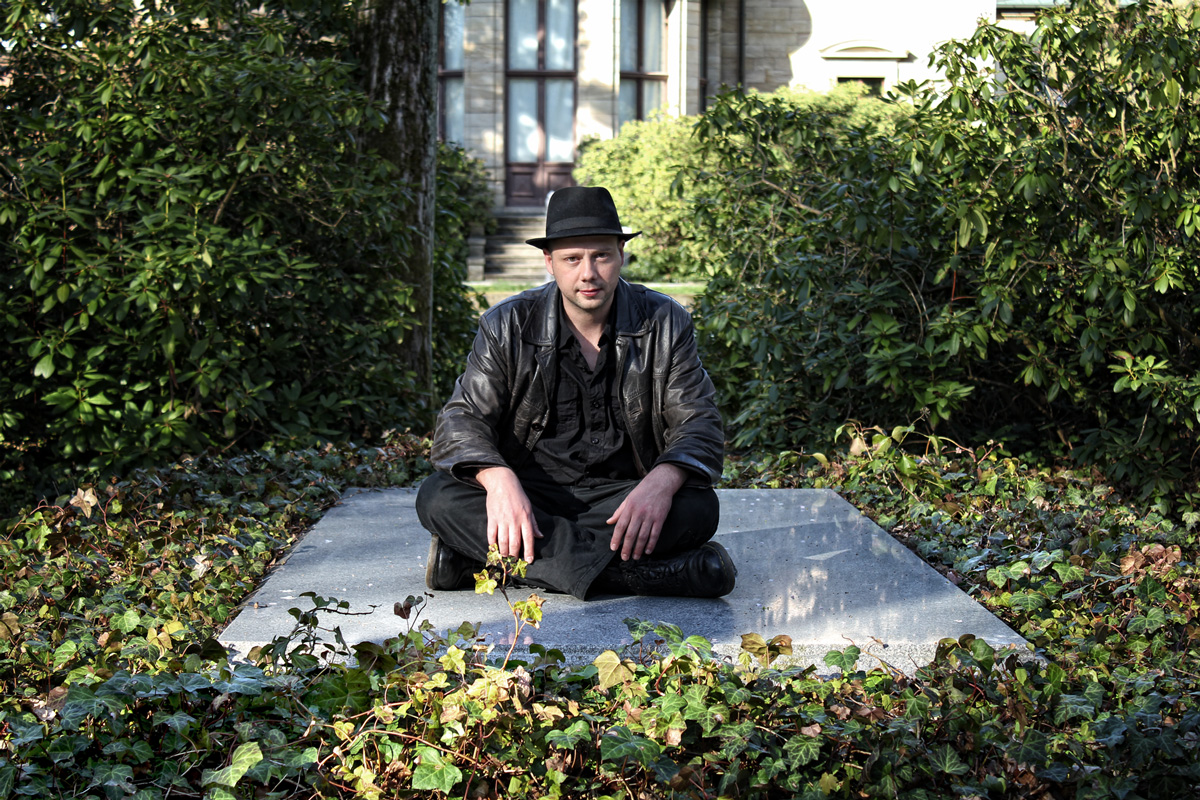
LID/ SELF-PORTRAIT At the beginning of my period of study in London I decided to wear a hat and only the color black, every day for three years. I wanted to establish a definite, though unobtrusive marker through which this period could be ‘framed’. In hindsight it is interesting to see how such a small change in my appearance would modify my artistic practice and general experience of life. This decision had some definite, immediate consequences as I could, for example, not enter into churches and was even turned away from nightclubs without having to remove the hat. The hat would become a prominent feature of many of the artworks produced during the time.
In this way the self-portrait on Wagner’s grave is something of a double ‘lid’ upon a container: that of the gravestone as well as that of the hat upon my head. Both signal clear divisions between the various material states of being in time. I stopped wearing the hat and the colour black every day of the performance in Bodh Gaya, India, entitled ‘Thank You’ (14 February 2011). On the next page is an interview regarding the work I gave as part of an online exhibition entitled ‘Opening Borders/Opening Objects’, curated by MA/MFA/PHD students of, and hosted by, the University of Western Ontario, Canada, 1 May – 30 August 2010.
Q: Where did you get the object from?
(Please include the city and the venue)
JT: I purchased it at approximately 14h00 on Friday 29 September 2009 at a hat stall in Camden Lock Market, London, UK.
Q: Was the souvenir a gift, a purchased object, or a found object?
JT: Purchased, found object. (Even if you find an object one often still has to pay for it).
Q: If you purchased the object, how much did it cost?
JT: 35 Pounds sterling.
Q: What made you select/keep the object?
JT: When I moved to London from Johannesburg I felt that I wanted to change my appearance by wearing only black for the duration of my stay. Prior to this I had done a number of performance artworks wearing white workers uniforms. In some way I consider the change in my appearance indicative of a new phase in my work and life. Moreover I wanted to more fully integrate the performative aspects of my work into my everyday life without making it too obvious. I felt the hat fulfilled a multiplicity of roles here:
One, it suggested something about the notion of empire (the gentleman, the English bowler hat);
Two, it effectively covered my head, stopping the natural flow of energy both in and out – thus it could function as something of a lid on an otherwise open ‘container’;
Three, it is functional in that it allows the body to retain much of its heat in the cold weather of the UK (especially since I regularly shave my head).
Moreover, on account of my wearing the hat I was refused entry (or requested to remove it if I wished to stay) at two sites during this period:
22 January 2011, 11h34 – Cologne Cathedral, Cologne, Germany. After entering the space a priest asked me to remove the hat. I politely declined
and left.
25 September 2010, 22h14 – The My Hotel Bar at
My Hotel, Brighton, UK. The bar has a ‘no-hat’ policy and would not allow me entry despite the fact that
I was lodging at their premises.
The hat has also featured as an integral component in a number of artworks produced during this time. These include ‘blood rites/ eat your words’ (2010)
and ‘Prospecter’ (2010), amongst others.
Lastly, I will stop wearing the hat at the end of my period of studies in the UK (I am currently completing a PhD at the Slade School of Fine Art, UCL on a Commonwealth Scholarship).
Q: Is there anything else that you would like to tell us about your souvenir?
JT: On the inside of the hat the following inscription can be found: “100% Wool. Handmade. Made for England”.
 johanthom.com
