Feeds:
Comments

Posts Tagged ‘African art’

NIROX is pleased to present new and recent works by South African artist Johan Thom, exploring the material relationship between the tactile, time, and (negative) space.

The exhibition is structured in two parts, split across two venues. Held in NIROX’s residency workshop, part one includes a recent installation — Time after Time (2023) — in which an automated brick and bronze skull constantly rotate, narrowly missing each other. Across the road, at the Kromdraai Impact Hub, Thom presents three new works: Will you still be mine? (The weight of body in ice), a large photograph documenting his performance at Casa Wabi, Mexico, earlier this year; Dwell (the weight of my body as a brick), produced in collaboration with Modern Art Projects South Africa (MAPSA); and LH+RH+LHRH (Grasp), a major installation of over a thousand individual clay forms.

Dwell is a large replica of a red building brick, such is commonly used for the construction of homes, shelters, and buildings in South Africa. Made to the weight of the artist, it is a deceptively complex minimalist gesture in which the body is shown to be a contested, uneasy home — at once a space of ‘dwelling’ (of knowing and being) whilst also forming part of the skewed spatio-political and economic organisation of the contemporary South African landscape.

In turn, LH+RH+LHRH (Grasp) (2024) is a site-specific installation that gives three- dimensional form to the negative space generated by ‘grasping’ a lump of clay. The result is an overwhelming number of near alien, bone-like fragments, arranged in three minimalist, 10 x 3m rectangular grids.

In keeping with the context of the Cradle of Humankind, this arrangement is reminiscent of the anthropological/archeological sites nearby. Here, the act of grasping becomes a metaphor for that which remains unknown or undiscovered, suggesting that the tactile and material remain largely dormant, fecund repositories for rethinking our partial knowledge of the world.

RSVP: sven(at)niroxarts.com

The exhibition will be accompanied by a publication, with essays by Dr Sikho Siyotula (Research Associate, UP), Dr. Wayne Binitie (Associate Lecturer, Camberwell College of Art, London) and Sven Christian (Curator, NIROX), published by the Villa- Legodi Center for Sculpture in partnership with UJ Press. Also included in the exhibition is “Grasp (Fragment),” an educational kit developed for the tactile exploration and teaching of sculpture, in collaboration with Prof. Jenni Louwrens (Associate Professor in Visual Studies, School of the Arts, UP), The student Gallery at the Javett UP, the Claire & Edoardo Villa Will Trust and the Villa-Legodi Center for Sculpture. The artworks on exhibition have been generously supported by a number of organisations: NIROX Foundation; Villa-Legodi Center for Sculpture; Modern Art Projects South Africa; Casa Wabi, Mexico; The National Research Foundation of South Africa; The School of the Arts, University of Pretoria; Kalashnikovv Gallery

Figure details: Johan Thom, Will you still be mine (Del Mar#1), photographic production still form a performance in Casa Wabi, Mexico, 2024 (Sizes: 210 x 110cm).

Read Full Post »

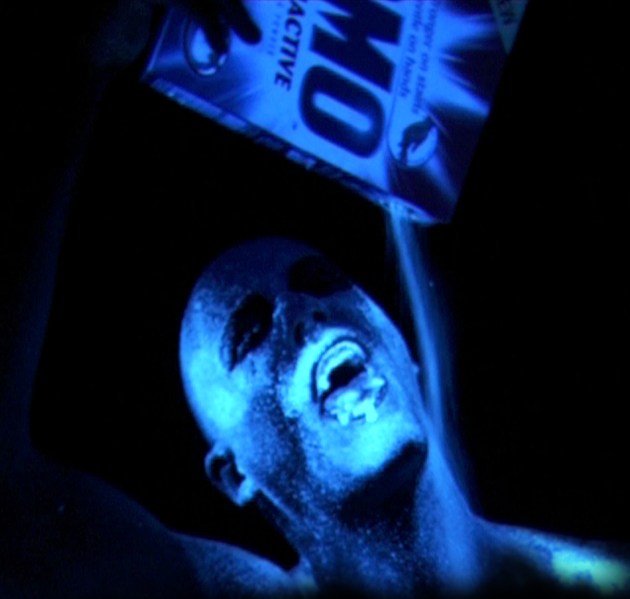
One night mid 2005 I crawled over the Nelson Mandela Bridge into the heart of the city of Johannesburg for a durational performance. I was accompanied by the artist Christian Nerf who hosted me for a 24 hour residency at the now defunct City and Suburban Studios. Barefoot and wearing only old jeans, I also covered myself with an cheap blanket that had been torn apart by dogs. I slowly entered the Johannesburg CBD like so many of the city’s unseen citizens would – with nothing. It was literally freezing (0 degrees centigrade) that night and fearing frostbite I nearly gave up a few times. But by midnight I finally made it to the other side of the bridge. It took over two hours to complete the action.

The work was never exhibited or made public until now. I do so now in honor of the artist Wiliam Pope L. who sadly passed away on 23 December this year. He was a great inspiration to me and, in particular, this artwork was made in response to his crawling pieces of the 1970’s. Like in many of Pope’s crawling pieces I carried an object in one hand, a video camera in my case. The camera stopped recording after 12min 26sec.

Rest in piece William, your work mattered.

Video still: ‘Crawling (The city of gold)’, 2005, Johan Thom. #art#contemporaryart#williampopel#performanceart#africanart#contemporaryperformanceart#crawling#southafricanart

Read Full Post »

54519016_2280500458938750_4616657477432246272_n

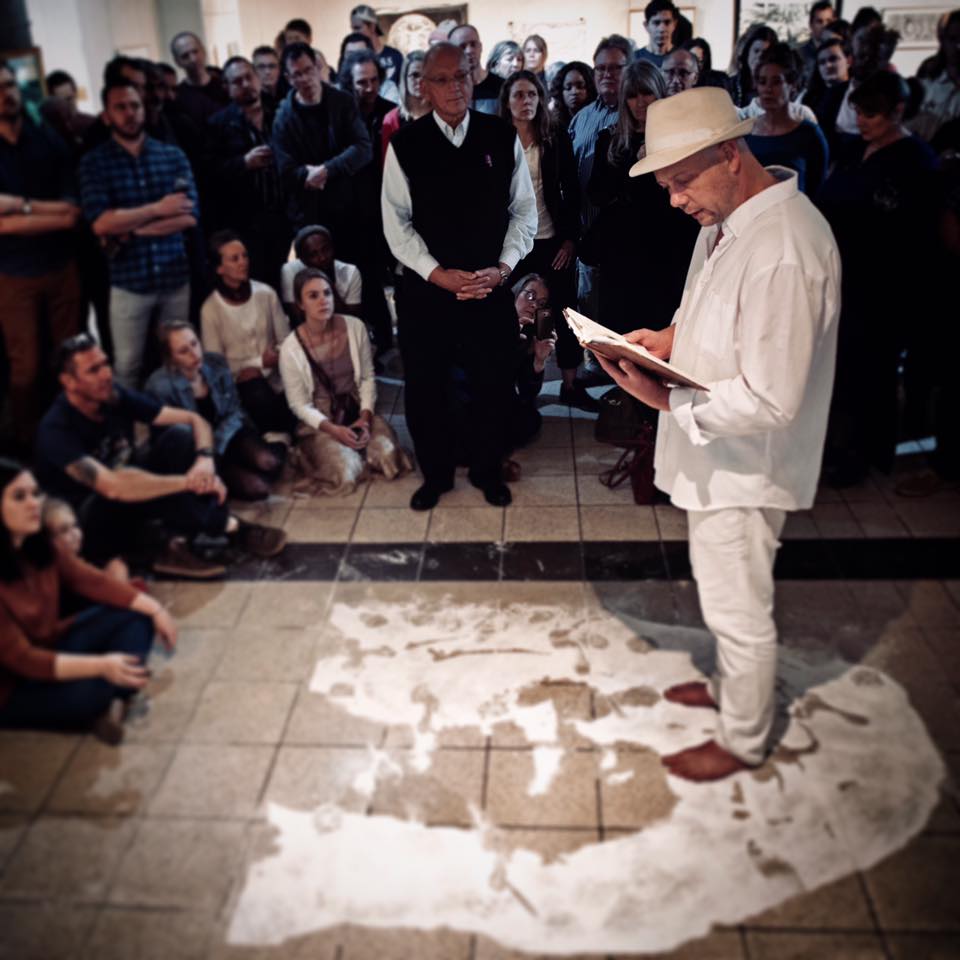
Speech act #2. Performance last August at the Association of Arts for Drawing Conclusions II curated by Diane Victor. For the work I read excerpts from texts out of my personal diaries for the period of 2009-13 whilst standing on an old portrait created with flour on the floor. The piece is a meditation on the materiality of memory and its artifacts. (Photograph by Carla Crafford).

69997156_2409649156023879_5282876990318182400_n

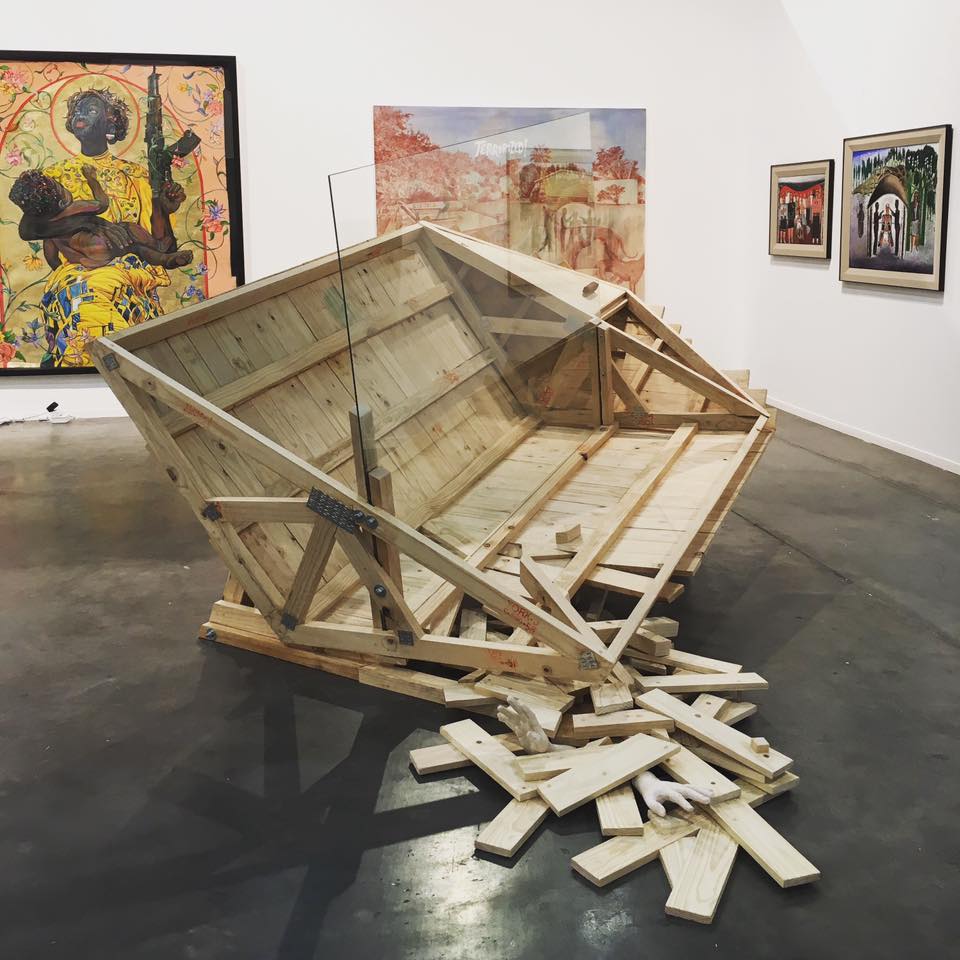
Houseboat #1. 2019. Wood, glass, Material One, glass and mixed media Sizes: 230cm x 300 cm x 205cm

70800893_2409281006060694_7506692046938177536_o

‘Missing: Selfportrait as an ass asleep in my son’s bed’ 2019. Photographic inkjet print on Hannemeule 2/3 (Edition of 3 and one artist proof) 50 cm x 65 cm Photo Credit: Garreth Fradgley

Read Full Post »

unnamed

The Bag Factory Artists’ Studios is thrilled to announce its 25th Anniversary Exhibition entitled
FOUNDATIONS AND FUTURES

When: Opening on Friday, 28th October, 2016

Time: 6pm

Where: Bag Factory Artists’ Studios, 10 Mahlatini Street, Fordsburg

The Exhibition Foundations and Futures runs from
Monday 31 October until Saturday 10 December 2016,
Monday to Friday 9am-5pm.

For 25 years the Bag Factory Artists’ Studios has been more than just a building and studio space. It has provided the foundation of many an artist’s career. Built out of the dream for artists from different backgrounds to be able to work together, the Bag Factory is a community that continuously supports and builds on its ethos of “the community studio space where artists practice is held in the highest regard and experimentation is encouraged.”

Over 25 years these foundations have been strengthened by the artists and staff who have poured their passion and efforts into the community and ethos of the space. In recent years the Bag Factory has worked hard to encourage a younger community of artists to engage in our programming ensuring that the life-blood of the space – interaction and development – continues to pump.

The community has played host to artists such as Helen Sebidi, Deborah Bell, Sam Nhlengethwa, Penny Siopsis, Benon Lutaaya, Blessing Ngobeni, Neo Matloga, Dinkies Sithole, Kay Hassan and many, many more. We have created an international following through our visiting artists programme and a consistent space for art loving members of the public to experience outstanding work.

While many things have changed over the past 25 years, 3 have more or less stayed the same.
1. After 25 years, artists David Koloane and Pat Mautloa still have studio space at the Bag Factory.
2. We remain in the hessian bag factory in Newtown that gave its name to the organisation.
3. We have never changed our creative community ethos.
The organization without any of these would not exist and each is linked.

On Friday 28th October 2016, the Bag Factory begins the celebration of an incredible 25 years with an exhibition entitled Foundations and Futures. Since the inception of the organization, over 300 artists have been through the space either as studio artists, visiting artists, participants in workshops and exhibitions and as winners of award programmes. All of them have been influenced and have influenced the space in many rich and diverse ways.

Foundations and Futures is an acknowledgment of these influences and the celebration of a space that not only supports the artistic community but is driven by it. The programme continues with artist performances, conversations and master classes through the months of October, November and December 2016.

Artists participating in the exhibition Foundations and Futures opening on Friday 28 October 2016 include Blake Daniels; Paul Emmanuel; Jarrett Erasmus; Marie Fricout; Gordon Froud; Carlo Galli; Arash Hanaei; Diana Hyslop; Sharlene Khan; Asanda Kupa; David Koloane; Shenaz Mahomed; Pat Mautloa; Tshepo Mosopa; Ndikhumbule Ngqinambi; Tracey Rose; Usha Seejarim; Lerato Shadi; Johan Thom; Stijn van Dorpe and Mary Wafer

Join us on this momentous occasion to celebrate 25 years of outstanding artists, art and art enthusiasts.

Read Full Post »

Victory-etc-2015-web

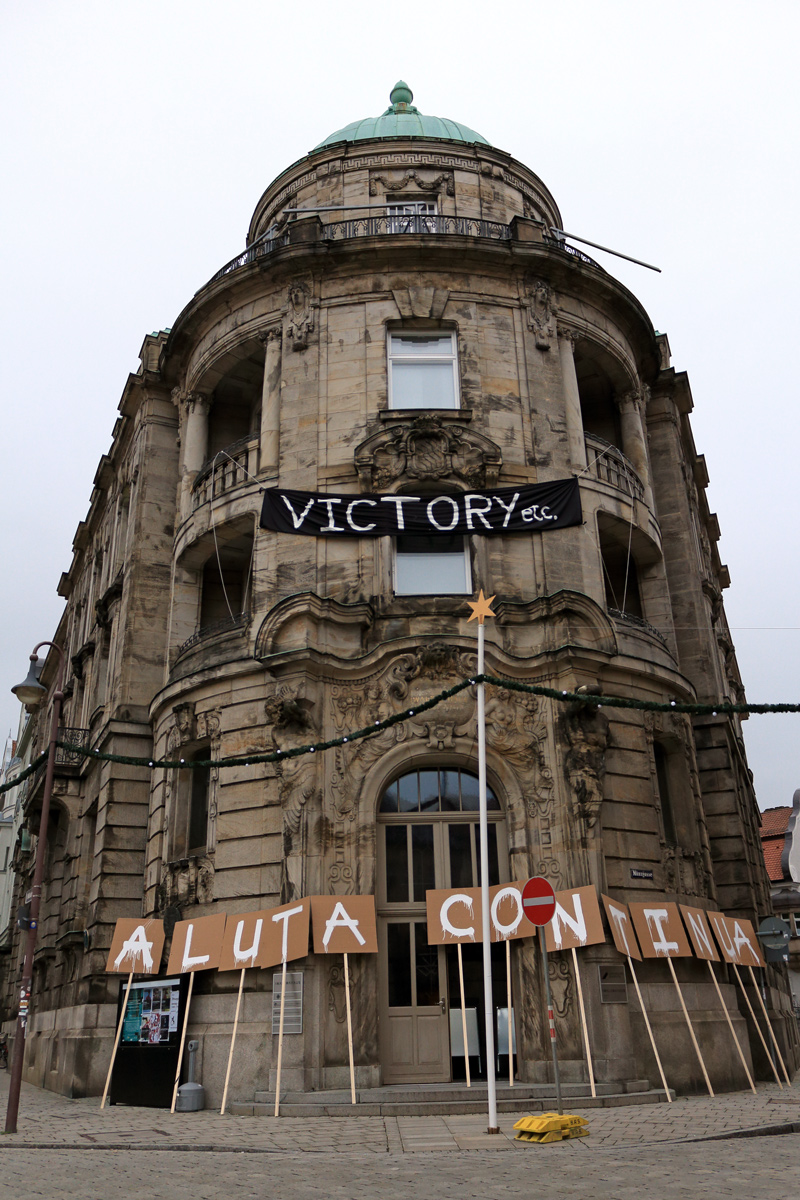
‘A luta continua ( Victory etc.)’ 2015
Johan Thom
Medium: Site specific intervention in mixed media for the conference ‘Art of Wagnis: Christoph Schlingensief’s Crossing of Wagner and Africa’ held at Iwalewahaus, Bayreuth, Germany, 4-6 Dec 2015

This artistic intervention is based upon a creative re-reading of the political slogan A luta continua, vitória é certa (The struggle continues, victory is certain). Historically this political slogan is associated with Mozambique’s armed struggle for independence from Portugal during the mid to nineteen seventies. To be specific, the slogan is considered the political rallying cry of Samora Michel, the erstwhile leader of the Frente de Libertação de Moçambique or Frelimo.

During the recent student protests against the rising costs of tertiary education in South Africa this slogan was often appropriated by students and their various supporters, appearing in social media on handmade posters in shorthand form simply as ‘A luta continua’. In this particular form, the slogan does not make explicit the possibility of victory, leaving instead the rather dispiriting possibility of a never-ending struggle. However, I think it may well be argued that the obverse is also true – that contemporary South African students are deeply aware of just how naive any hope for victory singular and total appears today.

By replacing the second part of the slogan ‘é certa’ with the term ‘etc’ (‘et cetera’) I wish to playfully shift the meaning of the original slogan into a somewhat humorous even self-critical statement that encapsulate elements of all the aforementioned (the history of the slogan, its appropriation and conditional re-employ in the present post-revolutionary moment). Today victory is no longer certain and nor is it understood as being the sole outcome of any revolutionary, anti-colonial struggle: instead it is joined by a host of other possible outcomes and post-colonial narratives, some of which have become all too familiar. In this regard, although the term ‘et cetera’ is mostly understood as meaning something to the effect of ‘and other related things’, at least one of the more discrete meanings inherent in its usage is the idea that the unspoken, or absent, terms it stands in for are so well known that it would be a waste of time to include them in full. In this way, the modified slogan embodies a form of cynicism borne from our familiarity with the disappointing, even wholly fatigued socio-cultural and political narratives and realities that have become the hallmarks of the post-revolutionary moment (the debt-ridden, corrupt post-colonial regime, the contemporary neo-colonial, capitalist sell-out of principals, assets, land and services et cetera).

Lastly, this artistic intervention is a meditation on the possibility of art to defamiliarise otherwise commonplace, accepted ideas, forms and meanings. In this much the work seeks to celebrate the fearless capacity of contemporary art to generate creative space for imaginative journeys into an unfamiliar future, an ‘etc.’ that signals space to explore, imagine and complete existing ideas without reifying the familiar.

Art cannot pray in the church of fear.

In memory of Christophe Schlingensief (1960-2010).

Read Full Post »

Terms of endearment by Johan Thom

Video still 1 ‘Terms of endearment’ Johan Thom, 2007

At Iwalewahaus for a 3 day festival/ screening of ‘The film will always be you’ curated by Abrie Fourie​ and Zoe Whitley​ as of this Saturday. Then for some mischevious fun with a dark performance as part of the conference program for ‘Art of Wagnis’ dedicated to the life and work of provocateur Christoph Schlingensief.

More details about the ‘Art of Wagnis’ conference here:

http://www.iwalewa.uni-bayreuth.de/de/program/20151204_Schlingensief-Tagung/index.html

and for ‘The Film will always be you’ here:

http://www.iwalewa.uni-bayreuth.de/de/program/20151127_Film-Will-Always-Be-Yo/index.html


Read Full Post »

You are invited to join us on Monday the 28th of September 2015 at 14h00 in the Visual Arts Gallery, University of Pretoria, for our Departmental Research Seminar.

I will be presenting a talk regarding the artworks from my recent solo exhibition at The Goodman Gallery in Johannesburg.

ResearchSeminarPoster2015_March (1)

Read Full Post »

Call for Participation
We would like to invite artworks, papers, posters, presentations, performances, activities for the Forum to be hosted by
Department of Visual Arts (UP)
24 July 2015
at
the Van Wouw house under the rubric of
*imagetext*

Taking our cue from WJT Mitchell’s concept imagetext we want to explore the complex, intermedial, multimodal exchange between image/text and text/image. The following topics may be creatively addressed but are not exclusive:

How are images translated into text? How is text imaged/imagined?
What is the interface between image and text/text and image?
How do image and text/ text and image relate?
How are the boundaries established, structured and maintained between image and text?

Participation may include but are not limited to the following:
• Art works
• Performances
• Papers (short 10 minutes and longer 20 minutes)
• Posters
• Flash Presentations (5 minutes)
• Interventions
• Recitals (poetic, musical)
• Demonstrations
• Video presentations
Please send proposals and abstracts for participation to Prof Amanda du Preez and Dr Johan Thom at imagetext2015@gmail.com before or on 7 July 2015.

Please also include a technical list of requirements with your proposal (including wall or floor space requirements, digital equipment list and so forth).

We look forward to receiving your proposals!

For attendance please RSVP with Ms Sikho Siyotula (imagetext2015@gmail.com).

Refreshments including tea and biscuits will be provided throughout the day. For lunch bookings a number of eateries including Piza e Vino (http://www.pizaevino.co.za/brooklyn.html ) is in walking distance from the venue.

Kindly supported and made possible by the Andrew W. Melon Foundation.

imagetext Call for Participation.docx-2

Read Full Post »

HAZARD Gallery presents PROTEST, the exhibition.

10658566_1596787133903819_3544678383426640335_o

Participating Artists: Vusi Beauchamp | Kudzanai Chiurai | Willem Boshoff | Abdoul-Ganiou Dermani | Gerald Machona | Angus MacKinnon | Pola Maneli | Samson Mnisi | Lavar Munroe | Artu Peatoo | Kenan Petersen | Jumoke Sanwo | Johan Thom | MJ Turpin | Fiatsi Va-Bene | Usha Seejarim | Laura Windvogel (Lady Skollie).

Read Full Post »

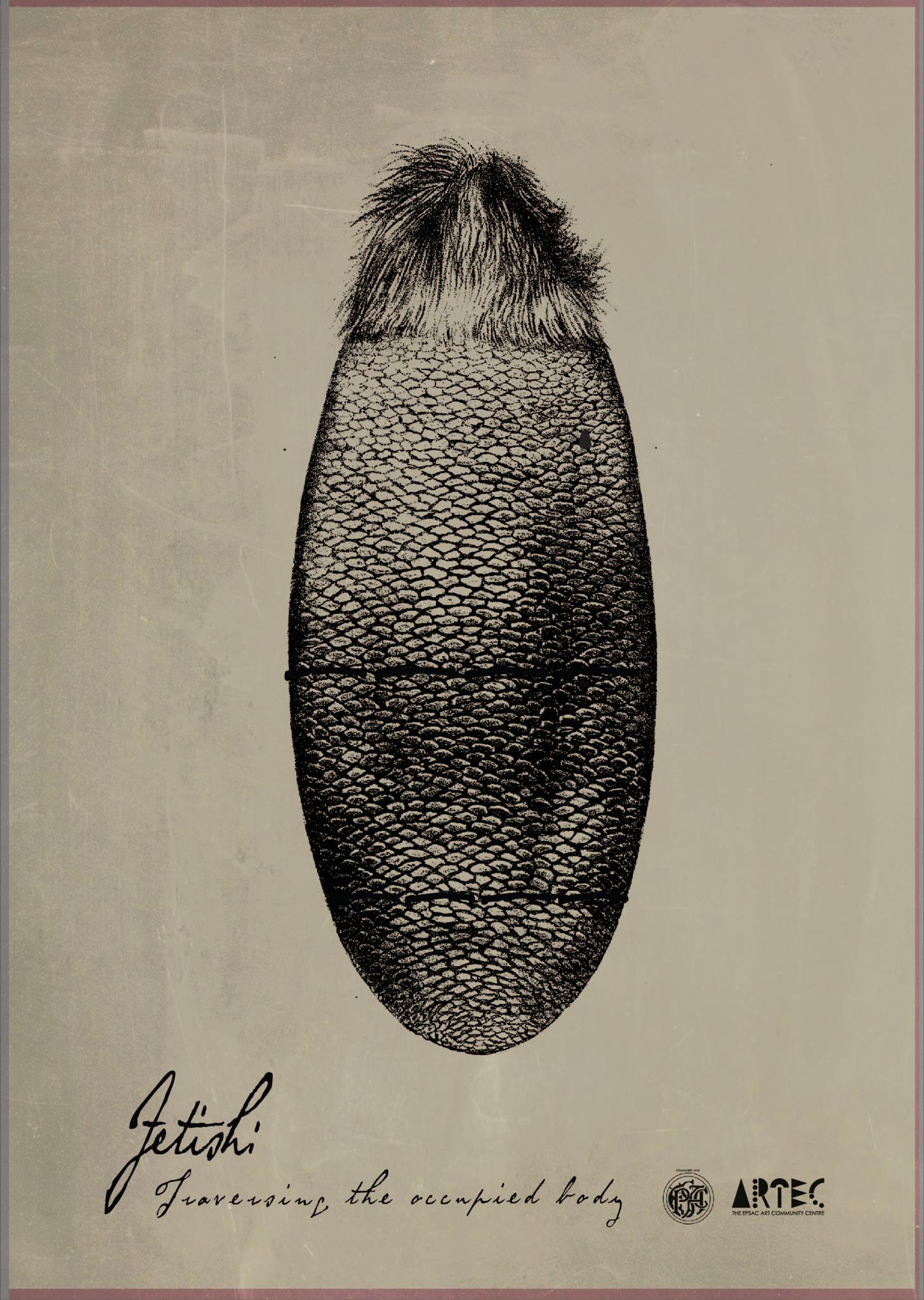
Artec1

Fetish: Traversing the occupied body.

1. The dark mass inscribed:
“There once was a lady from Ongar”

We approach the rough hued designation ‘Fetish’ with inveterate apprehension. The term marks a disturbed frontier between inside and outside, self and other, an elemental antagonism. Like the object it too is pocked and pitted with our near desires, fears and denials. The “Stereotype [Fetish]… is a form of knowledge and identification that vacillates between what is always in place, already known, and something that must be anxiously repeated (Bhabha in Hook, 2005, p13.),“the correct German word for the vicissitude of [this] idea would be ‘Verleugnung’ [‘disavowal’]’ (Freud, 1927, pp153.). It is through the subtractive synecdoche that the fetish gathers an excess of signification, desire providing the surplus in value and, thus, fantasy fills the anxious abyss between the self and the ‘other’. And yet; “as a power that transfers to beings, objects and agencies, it is universal and diffuse but it crystallizes at strategic points so that its flux can be regulated and diverted by certain groups or individuals for their own benefit” (Baudrillard, 1981, p88.).

2. Colonising fantasies or minding the business of others:
“Who had an affair with a Conger.”

The transference of this agency to the human body and its activities was first described in proto-psychoanalytical terms by Alfred Binet. (1887). Freud’s ‘fetish’, drawing heavily on Binet, functions both by constraining anxiety [through the activity of fantasy/ the anxiously repeated] and breeding anxiety through instability at the level of identification (there is, and, yet is not a phallus). Different objects and associate sets of practices become fetishised; the fetish must, however, be a construct, a fantasy that is frantically reinforced. “(‘I know that mother has not got a phallus, but still . . . [I believe she has got one]; ‘I know that Jews are people like us, but still . . . [there is something in them],)” (Žižek, 2008, pp12). Žižek further elaborates when he proposes that the prevalent Ideological edifice requires the fantasy of the ‘other’, a simple and concrete image to
constrain/fixate the imagination on in order for the image to become a mobilising agency. This valorised parody of our pleasures, the fetish, acts as an obscene bribe that coerces our oppressive and repressive drives into action. Performing a miraculous/fantasmic act of shifting signification, through disavowal, the fetishised makes the unknowable instantly identifiable whilst maintaining and even accentuating difference.
The contemporary commodity fetish acquires its magnified value through an analogous repetitive chant. For Marx the consumer’s ‘needs’ are mobilized within individuals by the strategy of desire and “although the commodity takes the shape of a physical thing, the commodity form” has “absolutely no connection with the physical nature of the article. (Marx in Stallybrass, 2011, pp184). The fetishistic resides in the illusory excess, an ideological agency, and not in any intrinsic value of the ‘thing’. The human body itself is thus codified and commodified, reduced to an abbreviated sequence of values that do not reside in the body itself. “The makeup of beauty, of the erotic body, is a process of marking it, [through the addition of…] jewellery, perfume, ornament, or through cutting it up, the hair, the feet, the buttocks. (1981, pp94, Baudrillard cited in Dant, 1996, pp13). The body is offered up as a series of significatory values which ultimately constitutes the ‘fetishised’ being/object/agency. It becomes clear that our ‘fetish’ oversteps the simple historical limit of the object and our investigation points instead to a metaphoric condensation, a process of inscription; “after all we have a passion for the code.”

3. An occupied snarl.
“They said; how does it feel to sleep with an eel?”

As Bataille re/marks; desire is usually closely linked with terror, intense pleasure and anguish (1998, 53). The fetish as occupying force personifies a narcissistic fantasy that attempts to sublimate the ‘other’ to the self, a volatile ‘value’ freely oscillating between the religious, economic and erotic. Fetishism, thus, is a refusal of difference; and “a perverse structure that perhaps underlies all desire” (Dant, 1996, P10-11). The whole metonymic apparatus marks the colonist as it marks ‘his’ ‘savage’. “It orders the world around the coordinates of fantasy (or magical beliefs) it thus makes possible… to structure and stabilise a world of ideology.” (Pp26, Hook). The ‘semiotic fetish’ points a crooked finger at the anxiety of all
(travellers) explorers, agents of colonies and ideologies, as they meet themselves on the foreign shore of ‘difference’ and fearfully grasps at fantasies with which to fill the abyss between the known and unknown dimensions their own reflection.

4. Deteretorialisation
“Well, she said, just like a man only longer.”

Surely cogitation, and play around the discursive formula of fetishistic disavowal allows us to “come to terms with this surplus (or, more precisely, leftover) means to acknowledge a fundamental deadlock (‘antagonism’), a kernel resisting symbolic integration-dissolution. (Zizek, 2008, pp24) By imitating the libidinal ticks and taking our pleasure sans the horizon of prevalent arch-ideological meanings that they are attached to, we may, as subversives and artists, agitate the seemingly implicit ideological excess and so provide a critique of hegemonic ideology by presenting continuous encounters with that radical other.
Following this artists are invited to submit work, in any medium, that reflect, critique or play around the contemporary and/or historic manifestations of the Fetishistic formulation as a means of resisting this symbolic dissolution/integration.
——————————————————————————————

(((((Let us be careful not to forget that the voice carries through a thin wall or door))))) Sees his faults, his mannerisms, and his appetites laid bare, by his complacent eyes they are reduced in size (((((Just as is: – who can deny it, the shadow towards the midday on the sundial, showing that the stomach can demand its reward;
– By the frost, who can deny it, the standard meter;
– Defying the mud, a rolled up trouser leg; …”
(Roussel. p75, 2011)

References
Bhabha, H. n.d. – The other Question – [Online]. Available at http://courses.washington.edu/…/bhabha_the%20other%20questi… [Accessed 3 January 2015]
Baudrillard, J. 1981. For a critique of the political economy of the sign. USA: Telos press LTD.
Dant, T. 1996. Fetishism and the social value of Objects. Sociological Review, 44 (3) [Online]. Available at http://eprints-test.lancs.ac.uk/33407/1/Fetishism_eprint.pdf
Freud, S. 1927. Fetishism (J. Stranchey, Trans.) The Complete psychological works of Sigmund Freud. (Vol. XXI, pp147-157). London: Hogarth and the Institute of Psychoanalysis.
Hook, D. 2005. – Paradoxes of the other: (Post) colonial racism, radical difference, stereotype as fetish. [Online] Available at http://pins.org.za/pins31/Hook.pdf [Accessed 3 January 2015].
Roussel, R. 2011. New Impressions of Africa. USA: Princeton University Press
Richardson, M. 1998. ed. Georges Bataille: Essential Writings . London: Sage Publications LTD.
Stallybrass, P. 2011. Marx’s coat. [Online]. Available at: http://davidmcnally.org/…/…/Marxs-Coat-peter-stallyBrass.pdf [Accessed 5 January 2015]
Žižek, S. 2008. The sublime object of ideology. London, New York: Verso Publications LTD.

Artec2

Read Full Post »

Older Posts »