Feeds:
Comments

Posts Tagged ‘Johan Thom’

Johan Thom: S TEBOJ SEM

Video predavanje

Pedagoška fakulteta Maribor – risarski atelje 0.60,

Torek, 30. 11. 2010, 10:30

Johan Thom (1976) je južnoafriški umetnik, ki trenutno živi in ustvarja v Londonu. Znan je po svojih performansih, video delih, skulpturah in tekstih. Večina del je ustvaril v javnih mestnih okoljih, parkih, galerijah, pri tem pa izhajal iz vsakdanjega življenja v Južni Afriki. Trenutno raziskuje pomen materialnega v umetnosti.

»Z ozirom na materialno umetniškega dela ne moremo razumeti le kot kulturne abstrakcije ali reprezentacije, pač pa umetniško delo predstavlja performativni angažma, ki proizvaja določene pomene s prepletanjem čutov, telesnosti in razuma.«

(Johan Thom)

V predavanju bo Johan Thom razmišljal o svoji fascinaciji in uporabi zlata v seriji svojih del, v katero spada tudi video instalacija Challenging Mud (After Kazuo Shiraga), ki je na ogled v Galeriji Media Nox.

JOHAN THOM: KLJUBOVATI BLATU

Video instalacija

Galerija Media Nox

premiera 29. 11. ob 18:00, ponovitve 30. 11. in 1. 12. med 12:00 in 18:00

»Južna Afrika je moja zibelka in moj grob – kulturno, politično in umetniško. Njena rdeča prst je v mojih žilah in zgoščuje mojo kri. Ko kljubujem blatu, kljubujem svojemu lastnemu bistvu.« (Johan Thom)

23. marca 2008 je južnoafriški umetnik Johan Thom prekril svoje celotno telo z medom in zlatimi lističi za zasebni performans, v katerem so ga njegova žena in skupina najbližjih živega pokopali. V umetniškem delu, ki je nastalo, je gledalec priča, kako nevidna roka počasi prekriva zlat lik ležeč v fetusni drži na dnu groba. Delo je skorajda hipnotično, ponavljajoč zvok in gib lopate in rdeče zemlje ustvarjata meditativno vzdušje, počasna transformacija slike to še dodatno poudarja.

Kombinacija zlatega lika, zemlje in fetusne drže služi kot osnova za več interpretacijskih drž, vse navidez arhaične ali mitične v svojem bistvu: spominja nas na močvirske like severne Anglije, pa tudi inkovske in egipčanske pogrebne običaje, simboliko zlata v svetovnih nazorih ljudstva Ašanti (Afrika), uporabo zlatih lističev v renesančnem slikarstvu in azijski religiozni ikonografiji ter, bližje umetnikovemu domu, odkritju zlata v Johannesburgu, Južni Afriki.

Delo je hommage performansu Challenging Mud (1956) Kazua Shirage (1924-2008) iz umetniške skupine Guitai.

Avtor: Johan Thom, www.johanthom.com

Kinematografija: Garreth Fradgley

Asistenti: Guy du Toit, Sarel Jansen van Rensburg, Mika le Roux, Shane de Lange, Nicholas du Toit

Petra Kolmančič, koordinatorka in organizatorka kulturnih programov

Mladinski kulturni center Maribor

Ljubljanska ulica 4, Maribor

www.mkc.si www.kulturniinkubator.si

02 300 29 94

Read Full Post »

performa_2010_flayer_1performa_2010_flayer_2

Mednarodni festival računalniških umetnosti (MFRU)

MFRU16-logoMFRU (v organizaciji MKC Maribor) ima v Sloveniji bogato tradicijo, saj velja za eno od osrednjih institucij računalniške umetnosti, ki s svojo stalno dejavnostjo skrbi za njeno prepoznavnost in razvoj. Ob ustanovitvi leta 1994 je bil eden prvih v tem delu sveta ter prvi in edini v Sloveniji. Od svojih začetkov je v Sloveniji in širši regiji opravil pionirsko delo pri predstavljanju teorije in prakse računalniške umetnosti ter novih medijev, s čimer pomembno prispeva k njihovi promociji in uveljavitvi, hkrati pa vzpostavlja temeljno kreativno jedro – v smislu produkcije novih intermedijskih del – v tem prostoru. MFRU tako zapolnjuje pomembno kulturno programsko nišo, s čimer Maribor uvršča med konkurenčna evropska festivalska mesta.

Read Full Post »

Sexuate Subjects
POLITICS, POETICS AND ETHICS
UCL, London / Friday 3rd to Sunday 5th / December 2010

This international interdisciplinary conference seeks to generate new theories and practices of subjectivity – ‘sexuate subjects’ – through contemporary poetic and political research in the visual arts, humanities and social sciences. It explores how these positive ethical subjectivities for women and men are constructed through spatial, material and textual feminist poetics and politics. Over three days, it will examine how sexuate subjects (people/disciplines) aid interdisciplinary responses to contemporary global crises of community conflict, social and environmental wellbeing. Nine panels and invited keynote speakers examine the following themes: environmental and social crises;  sustainable ecologies; poetic communities, pedagogies, voices and bodies; the politics of bio-medicine, body-rights, family and well-being.

Principal Keynote:

Luce Irigaray, Doctor in Philosophy and Director of Research in Philosophy, the Centre National de la Recherche Scientific, Paris


Keynotes: Jananne Al-Ani (University of the Arts) Dr Caroline Bergvall (University of Southampton) Dr Carol Brown (University of Auckland) Dr Karen Burns (Monash University) Professor Lorraine Code (Toronto University) Professor Elizabeth Grosz (Rutgers University): video-conference presentation Professor Dorita Hannah (Massey University, Wellington) Dr Doina Petrescu (Atelier d’Architecture Autogérée and University of Sheffield)

Invited: Frederica Giardini (University Roma-Tre, Rome) FATALE (KTH, Stockholm) Dr Gillian Howie (Liverpool University) Profesor Heinz Kimmerle (University of Rotterdam) Professor Mary Rawlinson (Stony Brook University, SUNY) Dr Marita Ryan (University of Limerick) Dr Margrit Shildrick (Queen’s University, Belfast) Professor Gail Schwab (Hofstra University, Long Island NY) Professor Judith Still (The University of Nottingham) Taking Place: Feminist Spatial Practice collective Gianni Vacchelli (Universita degli Studi di Bergamo)

Please go to the Conference website for registration and further details: www.ucl.ac.uk/silva/sexuate-subjects

Funders: the Bartlett School of Architecture Research Fund; UCL’s Grand Challenge of Intercultural Interactions; Centre for the Study of Contemporary Art, History of Art Department, UCL; Department of French UCL; Slade School of Fine Art, UCL; Hofstra University; Stony Brook University and FATALE, KTH, Stockholm

PS: I am presenting a performance as part of this session on Saturday 4 December:

9.30-16.00 Understanding Difference: why poetry matters
Panel, performances and exhibition

Convenors: Professor Timothy Mathews (UCL), Dr Sharon Morris (UCL)
Contributors: Helen Benigson, Taru Elfving, Geraldine Finn, Jane Gilbert, Kristen Kreider & James O’Leary, Miriam Leonard, Tim Mathews, Sharon Morris, Caroline Phillips, Simone Roberts, Nastja Ronkko, Kai Tai, Johan Thom

Read Full Post »

Read Full Post »

Read Full Post »


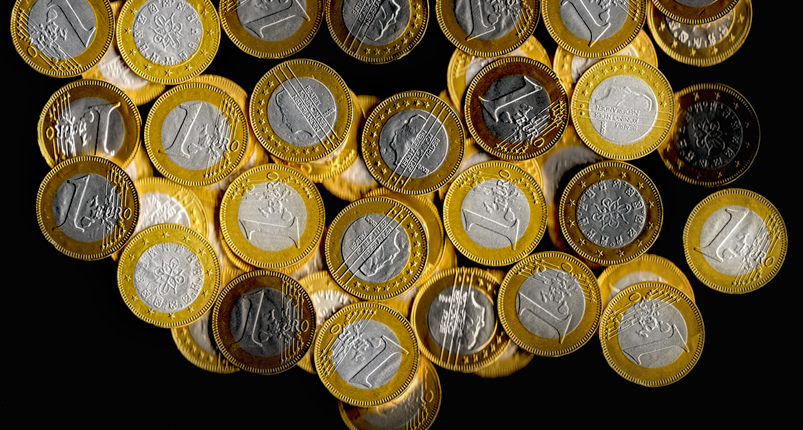
Gold Euro chocolate coins distributed to audience as part of statement read at ‘Real Presence 2010: Expanded concept of art practice and art education’,  held in Belgrade and organised by Biljana Tomic and Dobrila Denegri, nKA-Ica,
Belgrade, Serbia

ARTIST STATEMENT Statement prepared for ‘Real Presence 2010: Expanded concept of art practice and art education’,  held in Belgrade and organised by Biljana Tomic and Dobrila Denegri (nKA-Ica, Belgrade).

I am truly disappointed and saddened to not to be there with you all. This is due to circumstances
beyond my control. In this regard I have sent along a small component of the talk and the performance that I was due to give as part of the program.

The artist Gary Stevens has kindly agreed to distribute some gold Euro chocolate coins amongst the audience and to read this statement. Whilst you listen I ask that each of you take one and pass them along.  You may do with these coins whatever you desire but with the exception of any diabetics in the audience, it is my sincere hope that you will eat them at some point.

Given the turn of events, the gold euro chocolate
coin now seems an apt – if somewhat obvious – reference inasmuch as it brings together a number of ‘threads’. These threads are as much conceptual, as material, artistic, practical and political in nature: I am not with you for I have had problems obtaining a visa. This due to the fact that Belgrade is not part of the EU – for which as luck would have it I currently do have a temporary Schengen visa. Moreover,  I am currently living in London on a temporary student visa. It’s all somewhat Kafkaesque and my situation is far from unique or extraordinary.

Moreover, I am a South African and gold does have a particular history there, in the messy politics and history of the ‘new world’ too. The promise and subsequent discovery of gold at the Rand in 1852 in no small way contributed to my being what and
who I am today – a white African with the eponymous first name of ’Johannes’. (Statistically speaking it is estimated that more than 40% of all the gold mined in the world thus far came from the main gold reef in Johannesburg – ergo the nickname ‘the city of Gold’).

It may be said that the gold coin implies some dominant form of ‘currency’ – one that shapes who we are,  how we move around in the world (or not) and most specifically how this ‘frames’ the role of the artist therein.

In order to keep it short, I am just going to say one more thing: I have sent along these gold chocolate Euros because I think there is an important way in which artists communicate through materials – transforming ourselves and the world around us in the process. This way of communicating cannot simply be framed by discourse and language – a statement by which I mean to imply that such material exchanges will always modify, exceed and question the representational structures that we have so carefully cultivated in order to make sense of the world and our place in it.

In short, apart from what this gold chocolate coin looks like, it has a number of material properties that somehow resonate with the core of our very being as humans: its smell, taste, texture and so on all contribute to some kind of mutual affinity between us and it. This simple material affirmation of the world draws our attention not only to what we are, but rather, to what we could become.

And unlike the visa that participates in the more one-sided process of ‘writing us’, this story always has more than two sides or possible outcomes – a simple fact borne out by the sheer diversity and vastness of the natural world that surrounds us.

Johan Thom, London 2010

Read Full Post »

TALKS & LECTURES: “EXPANDED CONCEPT OF ART PRACTICE AND ART EDUCATION”

26.08 – 7.09. 2010 / 15.30 – 19.30

Venue:             Belgrade City Library / Knez Mihailova street, 56 / http://www.bgb.rs

Calendar of lectures, talks and presentations (power point, video) – daily program 15.30 till 19.30

15.30 17.00 18.15 19.00
Thursday 26.08 Dobrila Denegri

Real Presence 2001-10

Academy of Fine Arts, Vienna – students presentation

Academy of Fine Arts, Vienna – students presentation The Icelandic Art Academy

Mans Wrange (Rektor, KKH – Royal Institute of Art, Stockholm)

Gabriëlle Schleijpen (Director, ArtEZ Institute of the Arts, Enschede
Friday 27.08 KHIO – Royal Academy for Arts, Oslo Finnish Academy of Fine Arts

University of Applied Arts Vienna

Thomas Bayrle (Frankfurt) Helke Bayrle (Frankfurt) film screening / Porticus
Saturday 28.08 UCLA, Media & Design Dep. Los Angeles

ArtEZ Institute of the Arts, Enschede

Hansung University, Seul

Royal Institute of Art, Stockholm

Ecole Municipale des Beaux-Arts de Bordeaux

ERBA Ecole Régionale des Beaux Arts de Rennes

Marta Smolinska (Phd. Chair of the History of Art and Culture, Nicolaus Copernicus University, Torun, Roland) Sibylle Omlin

Director, ECAV – Ecole cantonale d’Art du Valais

Sunday 29.08 FREE / FREE / FREE / FREE /
Monday 30.08 Bezalel Academy of Arts and Design – MFA ECAV – Ecole cantonale d’Art du Valais

National University of Arts – Bucharest

Simon Thorogood, Artist, London Fashion College Johan Thom

Artist, Johannesburg / London

Tuesday 31.08 Hungarian University of Fine Arts, Budapest Accademia di Belle Arti di Palermo Stephan Schmidt-Wulffen (Dean, Akademie der Bildenden Künste, Wien) Opening of the exhibition – Belgrade City Museum
Wednesday 1.09 Ecole Supérieure des Beaux-arts de Nantes Métropole individual presentations of students from Germany, Greece, Faculty for Fine Arts, Belgrade

Adrian Notz (Curator, Cabaret Voltaire, Zurich

Opening of the exhibition – Palazzo Italia
Thursday 2.09 Facultad de Bellas Artes, Universidad Complutense de Madrid

Facultad de Bellas Artes Alonso Cano, Granata

Middelsex University of Art London

Laban, London

Central Saint Martins College

Accademia di Belle Arti di Brera

individual presentations Italy

IUAV – Venice

Accademia di Belle Arti, Carrara

Malin Stahl, Stockholm

Joa Ljungberg (Curator, Moderna Museet, Malmo)

Ósk Vilhjálmsdóttir Artist, (Professor, Academy of the Arts, Reykjavík

Friday 3.09 UCSB – University of California, Santa Barbara /

individual presentations Singapore, Johannesburg, Ucraina

Sharon Yaari, Artist,  (Professors, Bazulel Academy for Art & Design, Tel Aviv), Seppo Salminen Artist, (Professor, Kuvataideakatemia, Helsinki)

Janos Sugar Artist, (Professor, Intermedia Faculty of the Hungarian University of Fine Arts, Budapest)

Richard Ross Artist, (Professor, UCSB, Santa Barbara
Saturday 4.09 Staedelschule, Frankfurt Tobias Rehberger Artist, (Vice-dean, Staatliche Hochschule für Bildende Kunste, Frankfurt Erik Krikortz, Artist, Stockholm Opening of the exhibition – HAOS GALLERY / HOUSE OF LEGACY
Sunday 5.09 FREE / FREE / FREE / Opening of the exhibition – KAZAMATI / REMONT
Monday 6.09 Rainer Fuchs (Curator, MUMOK, Vienna Chiara Parisi (Director, Centre international d’art et du paysage de l’île de Vassivière Giulio Alessandri (Vice-director CLASAV, IUAV – FDA, Venezia Opening of the exhibition – MKM – MAGACIN
Tuesday 7.09 Patricia Solini (Professor, Ecole Supérieure des Beaux-Arts de Nantes Métropole), Jean-Sylvain Bieth (Professor, Ecole Supérieure des Beaux-Arts de Nantes Métropole) Medine Altiok (MOCA, Zurich);

Natasa Teofilovic (Lecturer, Faculty of Architecture, Belgrade)

Wednesday 8.09 DISINSTALLING CLENAING DEPARTURES

Participants:

Stephan Schmidt-Wulffen (Dean, Akademie der Bildenden Künste, Wien), Mans Wrange (Rektor/Vice-Chancellor, KKH – Royal Institute of Art, Stockholm), Milenko Prvacki (Dean, Lasalle-Sia College of The Arts Singapore), Tobias Rehberger (Vice-dean, Staatliche Hochschule für Bildende Kunste, Frankfurt), Victoria Vesna (Director, Arts&Science Centre, UCLA, Los Angeles / Parsons The New School for Design, NY), Peter Pakesh (Director, Landesmuseum – Joanneum, Kunsthaus Graz), Chiara Parisi (Director, Centre international d’art et du paysage de l’île de Vassivière), Angela Vettese (Director CLASAV, IUAV – FDA, Venezia), Giulio Alessandri (Vice-director CLASAV, IUAV – FDA, Venezia), Catterina Seia (Cultural manager, Art for Business), Gabriëlle Schleijpen (Director, DAI – ArtEZ Institute of the Arts, Enschede), Sibylle Omlin (Director, ECAV – Ecole cantonale d’Art du Valais), Rainer Fuchs (Curator, MUMOK, Vienna), Joa Ljungberg (Curator, Moderna Museet, Malmo), Adrian Notz (Curator, Cabaret Voltaire, Zurich); Seppo Salminen (Professor, Kuvataideakatemia, Helsinki), Patricia Solini (Professor, Ecole Supérieure des Beaux-Arts de Nantes Métropole), Jean-Sylvain Bieth (Professor, Ecole Supérieure des Beaux-Arts de Nantes Métropole), Ósk Vilhjálmsdóttir (Professor, Academy of the Arts, Reykjavík), Sharon Yaari, Gil Shani (Professors, Bazulel Academy for Art & Design, Tel Aviv), Janos Sugar (Professor, Intermedia Faculty of the Hungarian University of Fine Arts, Budapest), Richard Ross (Professor, UCSB, Santa Barbara), Simon Thorogood, (Professor, London Fashion College), Mrdjan Bajic (Professor, Faculty of Visual Arts, Belgrade), Marta Smolinska (Phd. Chair of the History of Art and Culture, Nicolaus Copernicus University, Torun, Poland), Thomas and Helke Bayrle (Frankfurt), Erik Krikortz (Stockholm), Johan Thom (London / Johannesburg), Medine Altiok (MOCA, Zurich); Natasa Teofilovic (Lecturer, Faculty of Architecture, Belgrade) and many more.

Other venues:

EXHIBITION: “PRESENCES” / 31.08 – 7.09. 2010

Openings:         31.08 – Konak Kneginje Ljubice at 19.00

01.09 – Italian cultural institute at 19.00

Venues of exhibitions and special interventions:

WORKSHOP: “REAL PRESENCE 10” / 25.08 – 8.09. 2010

Openings:         4.09 / 5.09 / 6.09 from 19.00

Venues:

  • MKM – Magacin u Kraljevića Marka, Kraljevića Marka street, 4 – 8
  • Belgrade Heritage House / Kuca Legata / Kneza Mihaila street, 46 / http://www.kucalegata.org/
  • Military museum – Vojni Muzej – Kazamati / Kalemegdan fortress BB / www.muzej.mod.gov.rs

Read Full Post »

The Slade School of Fine Art (UCL) invites you to

‘Spillage’

An exhibition of works produced by current PhD students

Venue: The Slade Research Centre, Woburn Square, London, WC1H OAB
Private View: Friday 25 June from 6pm
Dates: 25 – 30 June
web: http://www.ucl.ac.uk/slade/index.php

Read Full Post »


Fried Art presents: Games People Play (a group exhibition of South African Artists)

Preview on Thursday 17 June at 18h30 by Dr Franco Colin

Music by Bongi Nthombeni

June 2010, the ears are numbed by the cacophony of vuvuzelas in the crowded South African soccer stadiums. What’s happening on the field is what does justice to the idea of GAME. Yet, such formalised games are often only a mild version of the kind of games that are played out in the human arena of political, social, personal and business games, agendas and encounters.  These games are ongoing; there’s plenty at stake and much tug of war.

During the 1960s, game theory became a popular study of the way in which human beings operate and compete especially in the fields of computer science, politics, agriculture and economics. Game theory has proven instrumental in understanding how and why decisions are made. Games People Play (1964), a groundbreaking pop psychology book by Eric Berne, introduced the notion of such human gaming based on Freud’s psychodynamic model, particularly the ego states, as a psychology of human interactions called “transactional analysis”. According to Berne, games are ritualistic transactions or behaviour patterns between individuals that can indicate hidden feelings or emotions.  In a general sense it can be argued that human encounters involve mind games in which people interact through a patterned and predictable series of “transactions” that are superficially conceivable, but sometimes could mask hidden agendas.  Berne (Butler-Bowden 2007) came to the view that within each person were three selves or “ego states” which often contradicted each other. They were characterized by the attitudes and thinking of a parental figure (Parent); the adult-like rationality, objectivity and acceptance of the truth (Adult); and the stances and fixations of a child (Child). The three selves correspond loosely to Freud’s superego (Parent), ego (Adult) and id (Child). Berne (Butler-Bowden 2007) further argued  that we teach our children all the pastimes, rituals and procedures they need to adapt to the culture and get by in life, and spend a lot of time choosing their schools and activities, yet we don’t teach them about games, an unfortunate but realistic feature of the dynamics of every family and institution. The book spawned a well-known song by the same title written, composed and performed in 1968 by singer/song-writer Joe South.

During the eighteenth century, a game called “stag hunt “was developed by philosopher Jean-Jacques Rousseau. This game, also known as the assurance game, involves making a choice between individual safety and risky cooperation and involves the idea that two hunters who must decide whether to hunt a hare alone or a stag together.  ‘Arguably, the stag hunt describes the ethical dilemma of the scientists who built the atomic bomb. Roughly: The world would be better off without the bomb, but we have to try to build it because our enemy will. Better we have the bomb than our enemy; better both sides have the bomb than just our enemy’ (Poundstone [s.a.]).

In an interview with Arthur Holmberg, Milan Kundera (1985) stated: ‘ … playing games is an important source of pleasure. Real life is linked to a series of deceptions. It disappoints us with its futility. But when we consciously play games, as on stage, we already know that the game is not serious. Thus, the tragic futility of life becomes the joyous futility of play. In totalitarian regimes one quickly learns the importance of humor. You learn to trust or mistrust people because of the way they laugh. The modern world frightens me because it’s rapidly losing its sense of the playfulness of play.’ The playing of games can provide various satisfactions: aggressive and masochistic; expectant readiness with contempt of danger and consequent mastering of situations; repeated endurance of symbolic castration with resurrection of potency when one wins (Stokes 1956).

Accordingly, the “games” people play form the core of the subject matter in the works on display in Games people play.  The artworks on exhibition comment on the playing of games through a patterned and often predictable series of “transactions” that might not be superficially conceivable, but mask secret motives, feelings or emotions. Similarly, there are many word games, echoed in the game of the “language” of the artwork that is open-ended and  often cloaked in metonymy. The philosopher Wittgenstein maintained that words have a “family” of usages and resemblances: the word “game”, for example, could indicate board games, card games, virtual gaming or soccer games. Such games do not hold a single critical mutual attribute, but rather possess common characteristics and similarities.

Fried Art

http://www.friedcontemporary.com/

430 Charles St Brooklyn, Pretoria, South Africa 0181

TEL/FAX:   +27 12 3460158

E-MAIL

General information and art courses: info@friedcontemporary.com

Exhibitions and artists: art@friedcontemporary.com

Sources quoted

Butler-Bowden, T. 2007. 50 Psychology Classics: Who We Are, How We Think, What We Do: Insight and inspiration from 50 key books. Nicholas Brealey Publishing, 2007 . [O] Available: http://knol.google.com/k/games-people-play#. Accessed 14 June 2010.

Poundstone, W [s.a.]. Excerpts from Prisoner’s Dilemma. [O] Available: http://www.heretical.com/pound/staghunt.html. Accessed 14 June 2010.

Stokes, A. 1956. Psychoanalytic Reflections on the Development of Ball Games, Particularly Cricket. International Journal of Psychoanalysis. XXXVII:185-192.

Kundera, M. 1985.  Interview with Arthur Holmberg. Performing arts journal, Volume 9, 1:25-27.

Read Full Post »

D21 Kunstraum  Leipzig

PRIVATE VIEWING – SOUTH AFRICAN VIDEO ART

Steve Kwena Mokwena. Memory
Bridget Baker
Peter Jones
Aryan Kaganof & Nicola Deane
Kemang Wa Lehulere
Steve Kwena Mokwena
George Mahashe
Kyle Southgate
Johan Thom
Robert Weinek
+ Claudia Shneider

Steve Kwena Mokwena, THE MEMORY OF THE BRIDGE, (Still) 2010
Exhibition in Cooperation with JOBURG FRINGE, ZA.

June 12 – 25, 2010
Opening: June 11, 2010, 7 p.m.
Opening hours: Thu – Sun, 1 – 7 p.m.

D21 art space | Demmeringstr. 21 | D-04177 Leipzig | Germany | www.d21-leipzig.de


Read Full Post »

« Newer Posts - Older Posts »