Feeds:
Comments

Posts Tagged ‘Contemporary South African Art’

Click here to find out more!

From the viewer’s perspective, video installations can be a tricky medium to wrap your head around. The content is often obscure and indecipherable, and it’s all to easy too walk away feeling more than a little confused. However, if you’re armed with some background knowledge on the artist and their intentions, video installations can be a rewarding and fascinating art form.

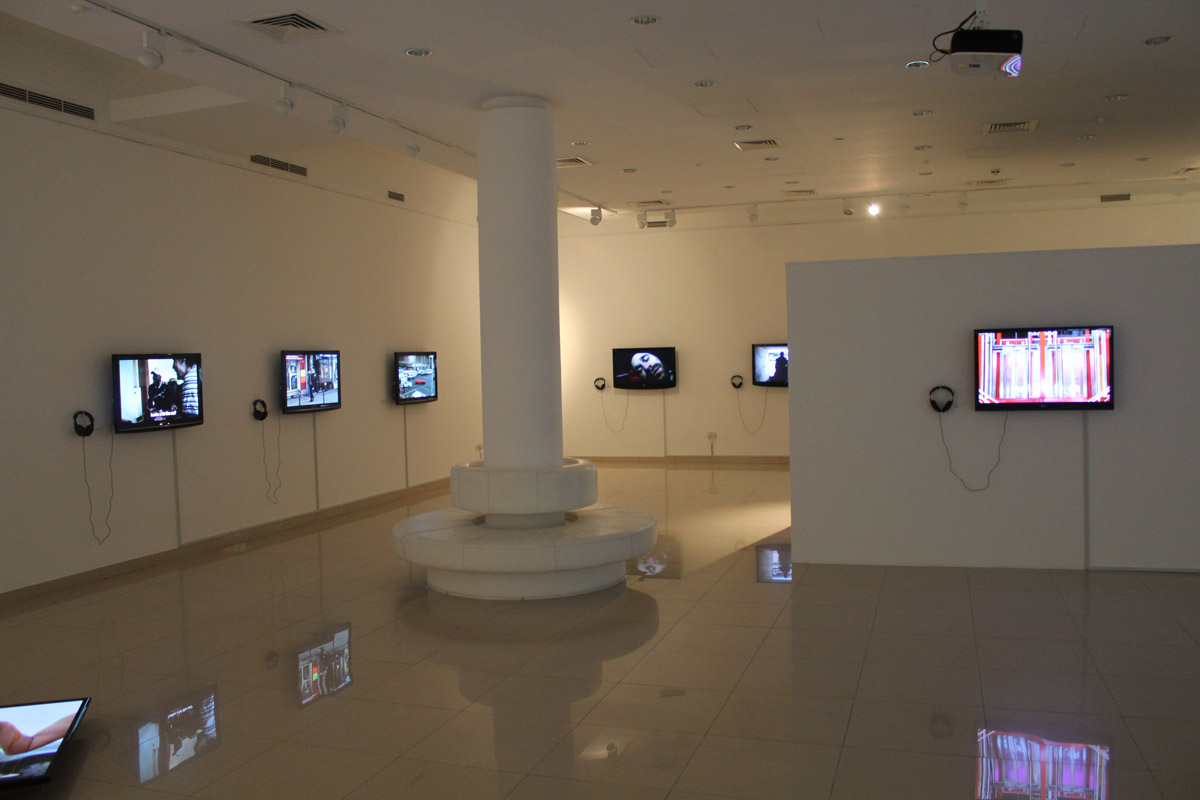
One such exhibition, entitled ‘Mine’ (showing at Ductac’s Gallery of Light), presents video installations of 17 South African artists (including well-known notables William Kentbridge and Robin Rhode), in which they comment on personal ownership. Each artist also appears in his or her film. To help you understand the pieces, we asked five of the artists. to give us an insight into their work.

Johan Thom
Title of installation
‘Terms of Endearment’.

Length of film
Three minutes 49 seconds.

Describe your video installation.
In short, it’s a work in which I wanted to express something about the relationship between domesticity, art and the subconscious. For most of my career my home has also been my studio. There’s something interesting about the way in which art is simultaneously very personal and social, domestic and public.

What message are you trying to convey?
I think we ought to carefully examine the myriad ways in which ideas about dirt and cleanliness figure so prominently in the way we structure and understand the meaning of our lives.

Where do you appear in the film?
I appear made up in ‘skullface’, as a delirious character that seems to celebrate the material messiness of life even from beyond the grave.

Who inspires you?
The ingenuity of ordinary people.

Do you have a favourite filmmaker?
I love film generally, and three names come to mind immediately: Steve McQueen, Bill Viola and Werner Herzog.

What makes you proud to be South African?
We are a hybrid, multicultural nation.

…….

Also read Robin Rhode, Bridget Baker, Lerato Shadi and Jacques Coetzer’s pieces in the Time Out by clicking on this link:  South African video art.

Read Full Post »

1189.jpg

SCP: What’s your opinion of “Art” in JHB? Or the “artists” in JHB? – Firstly in relation to South Africa and then to international trends. In relation to where Johannesburg’s art is going?

JT: I honestly believe that South African artists (designers, fine artists, jewelers, architects, authors etc.) are brilliant and rank amongst the best in the world. South Africa is a bit like a global crucible where everything comes together – in the process releasing incredible energy and generating countless new possibilities. Its like a real magic trick happening before your very eyes. Of course, its also painful to see things that we value (our culture, language and so on) slowly melting away but its wonderful to have that momentary realization that they could become just about anything. My only worry here is that South Africans have become very wealth obsessed and often this means that it’s no longer a question of ‘ergonomics’ but purely of ‘economics’.

As regards the field of architecture I sincerely hope that we can break away from the somewhat colonial idea that there is always more land available. We need to repair and transform the cities, existing suburbs and infrastructure without expanding horizontally. My thought here is twofold. First that we think about the long term sustainability of newly designed structures or even old ones that need replacing. A hundred years is too short a time frame. This will cost money but in the long run it will benefit us all. Secondly, we must protect the land. It is our lifeblood and we all fought so damn hard for it!

Globally I believe that contemporary art needs to discover a sense of urgency again. To paraphrase from a talk by designer Paula Scher, this does not mean that art needs to become ‘solemn’ but rather that it is a ‘serious’ activity. Serious art playfully takes things apart and offers new possibilities. Solemn art entrenches the status quo and accepts its limited place in the world (accordingly politicians and all kinds of bureaucrats simply love solemn, monumental art).

Regardless, Johannesburg has the possibility to be a global leader in terms of contemporary architecture as long as it does not become solemn. There is incredible wealth, a vast amount of people in need of architectural expertise (the wealthy and especially the poor), a general sense of optimism and real hope for the future. Certainly things should be ‘made better’ (a higher quality product and a overall social improvement) than they were under apartheid. Ons kan mos.

Read the full interview on this site HERE or on Kagablog by clicking HERE (link opens in a new window).

Read Full Post »

« Newer Posts